Net billing in Cyprus: can household solar still pay off?
Nov. 16, 2026
Since 1 January 2026, every new rooftop solar system in Cyprus has been connected under net billing, after the deadline for net metering applications closed on 31 December 2025. The "Photovoltaics for All" scheme expired on the same date. Households already on net metering keep their terms until their contracts run out. For everyone else, the economics of household solar have changed and the early figures show it: EAC data reported by the Cyprus Mail show 38,856 PV applications in 2025, against 1,835 by the end of August 2026.
What net billing in Cyprus changes
Under net metering, a household exported surplus solar power during the day and drew it back later, kilowatt-hour for kilowatt-hour, at the retail price. In effect, the grid acted as a free battery. Net billing separates the two flows. Electricity taken from the grid is billed at the retail tariff, while exported electricity is credited at wholesale rather than retail rates. Credits can no longer be carried forward against later consumption and new contracts run for 10 years rather than 15.
The change sits within a self-consumption framework designed by the Cyprus Energy Regulatory Authority (CERA), which followed the opening of the electricity market to competition in October 2025. The case for it rests on grid strain. Cyprus is an isolated network that cannot export its surplus to neighbouring countries and on sunny afternoons, rooftop output regularly exceeds demand. According to CyprusGrid figures cited by the Cyprus Mail, 162 GWh was curtailed in the first five months of 2026, roughly 65% of what could have been generated.
How much worse off a new solar household will be is disputed. In August, Energy Minister, Michalis Damianos, argued that the EAC first nets generation against consumption within each billing period before applying net billing, so for most EAC customers the benefit does not differ materially from the old regime. The fall in applications suggests many households are not convinced. Existing customers have had their own surprise: surplus credits were cancelled for net-metering customers in the February and March 2026 billing periods.
Where home battery storage comes in
If exported power is worth less, the logical response is to export less and use more at home. Home battery storage holds the midday surplus for the evening peak, when the household would otherwise buy electricity at the retail price.
Press reports have said that future state grants will make storage a mandatory condition. So far, that has not become a rule. The only scheme currently open to homeowners, the €20 million Save and Upgrade Homes 2026 call accepts applications until 30 December 2026. Its official FAQ lists batteries as an eligible cost, but does not make them compulsory. It does require any funded PV system to operate under net billing, at least one improvement to the building envelope, and a 60% cut in primary energy use. Panels alone do not qualify.
Batteries are not a guaranteed win either. Applications that include storage rose to 137 in 2026, or 7.4% of a much smaller total and academics quoted in the same report question whether the economics work for grid-connected homes. A dedicated legal framework for installing home batteries has also yet to be set, which raises safety questions.
Why shared generation and smart control matter more now
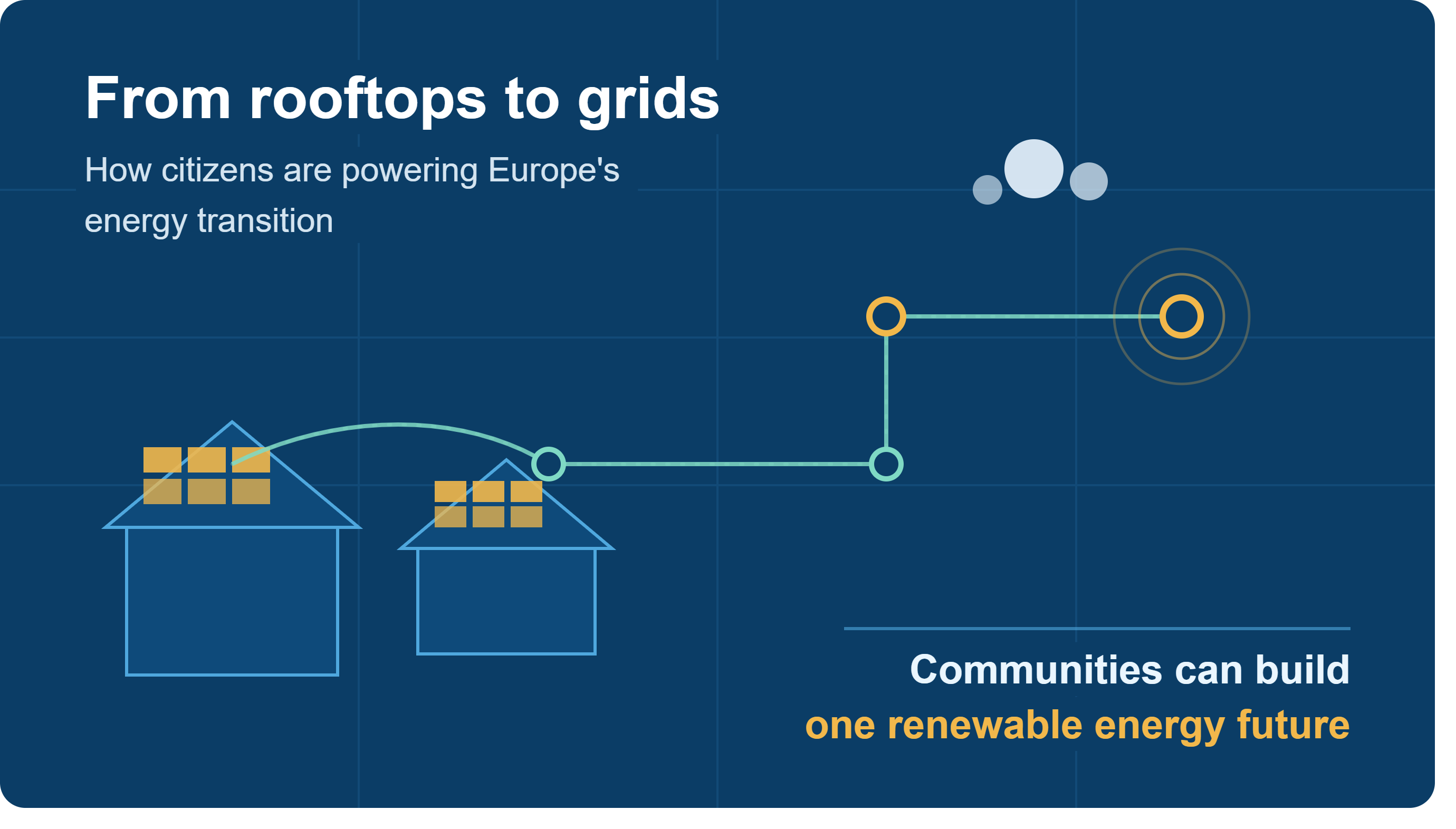
Net billing rewards using solar power at the moment it is produced. That favours two approaches. The first is smart solar-plus-battery management: systems that move water heating, air conditioning or electric vehicle charging into sunny hours and decide when a battery should charge or discharge. The second is sharing. In an energy community, one household's surplus can meet a neighbour's demand locally, rather than being sold cheaply to the grid or curtailed. A cooperative solar park with storage for 100 households in the Troodos region is one Cypriot example in development.
PHOEBE works on both. Within the Horizon Europe project SOCIAREM, it leads the IoT monitoring infrastructure for the energy community demonstration planned in Cyprus. Through the Erasmus+ project CITIZEMP, PHOEBE works with the Cyprus University of Technology and the Municipality of Athienou on the human side of shared generation, running co-creation workshops for residents and building local capacity.
What this means for future solar investments
Household solar can still make financial sense under net billing, but the return now depends on design more than on the tariff. A system sized to a home's daytime demand, paired with deliberate load shifting, keeps more of its value than one sized to export. A battery is easier to justify where evening demand is high and anyone planning one should check the current guide on the ministry's grants platform before committing, since conditions differ between calls. For homes with unsuitable roofs or tight budgets, shared generation may eventually offer a route that individual rooftops no longer do.